3-in-1 Manual Jewellery Rolling Mill | 76 mm Sheet | 1:2.5 Gear
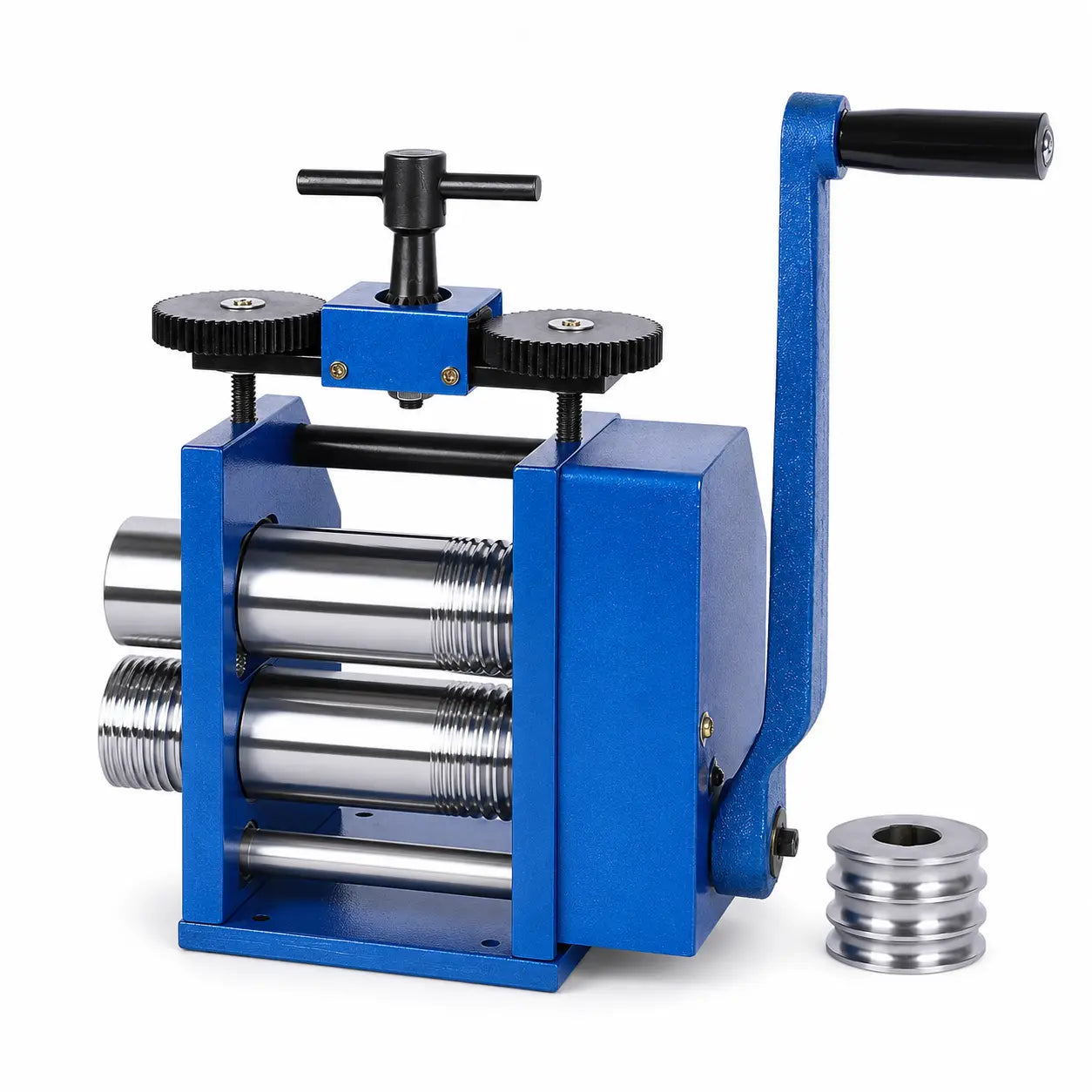
This hand-operated 3-in-1 jewellery rolling mill reduces and textures sheet up to 76 mm wide while forming square and half-round wire. Its 1:2.5 reduction gearing supports controlled, lower-effort passes for jewellers, students and small studios working with annealed non-ferrous metals.
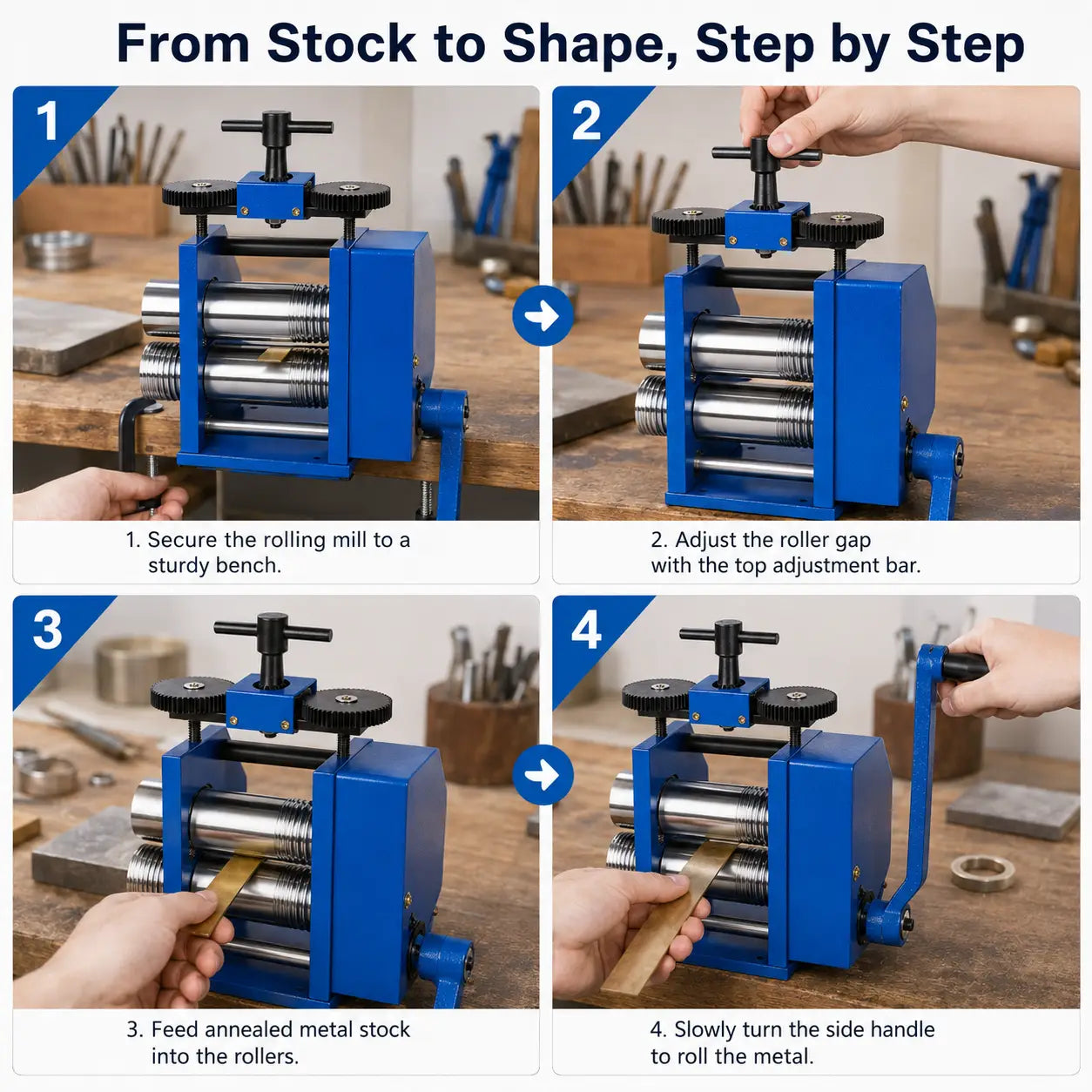
Secure the 17.3 kg unit to a stable workbench before operation. Anneal metal as its alloy and work-hardening condition require, and use small, measured reductions rather than forcing stock through in one pass.
Roller and Wire Profile Guide
| Function | Capacity / Profiles | Use When | Key Limit |
|---|---|---|---|
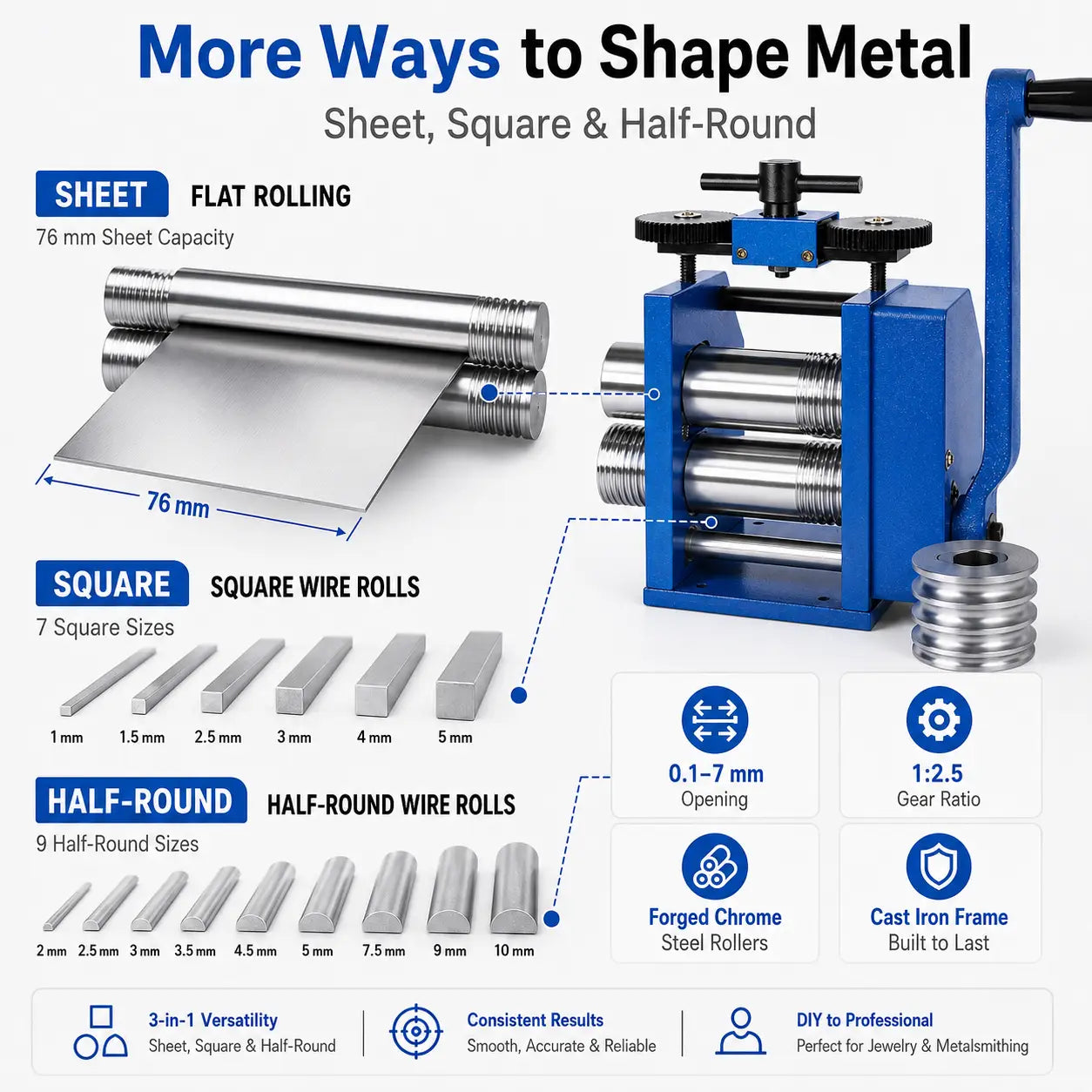
| Flat sheet reduction | 1–76 mm wide; 0.1–7 mm gap | Preparing sheet for cuffs, bangles, rings or texture work | Max 76 mm wide, 7 mm starting thickness |
| Square-wire forming | 1 / 1.5 / 2.5 / 3 / 4 / 5 / 6 mm | Square cross-section is required | Seven fixed groove sizes only |
| Half-round-wire forming | 2 / 2.5 / 3 / 3.5 / 4.5 / 5 / 7.5 / 9 / 10 mm | Flat-backed rounded profile is required | Replacement roller setup required |
| Texture transfer | Flat roller area | Pressing texture into annealed non-ferrous sheet | One controlled pass; depth depends on setup |
| Round-wire forming | Not supported | — | Choose a mill with dedicated round-wire grooves |
Best For / Not For
| Best For | Not For |
|---|---|
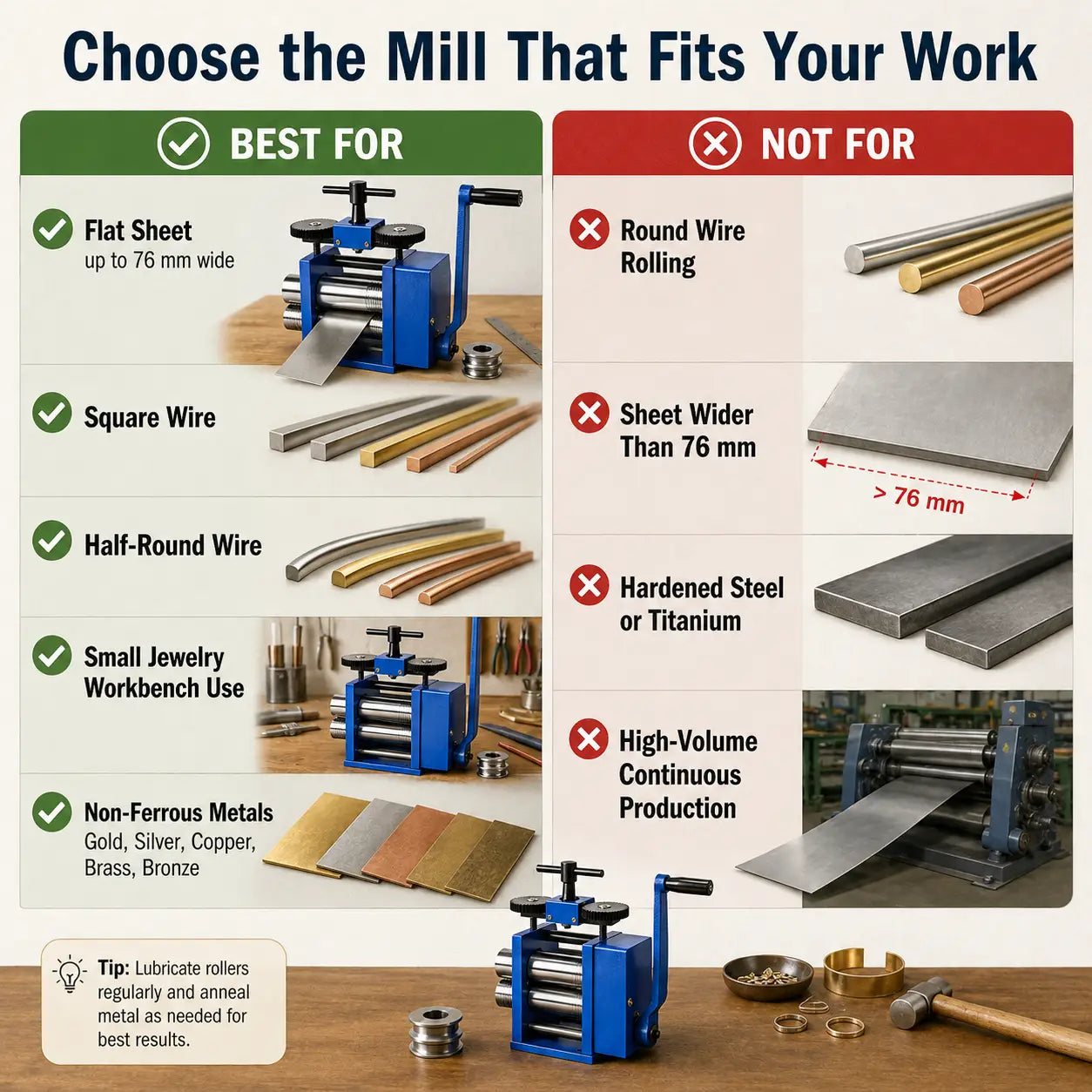
| Flat sheet up to 76 mm wide | Sheet wider than 76 mm |
| Seven square-wire sizes (1–6 mm) | Round-wire forming |
| Nine half-round-wire sizes (2–10 mm) | Steel, titanium or hardened metals |
| Texture transfer to annealed sheet | Hot rolling or powered production |
| Small jewellery studios and teaching benches | High-volume continuous output |
| Gold, silver, copper, brass and bronze | Operation on an unsecured workbench |
Technical Specifications
| Product type | 3-in-1 manual jewellery rolling mill |
| Functions | Flat sheet, square wire, half-round wire, texture transfer |
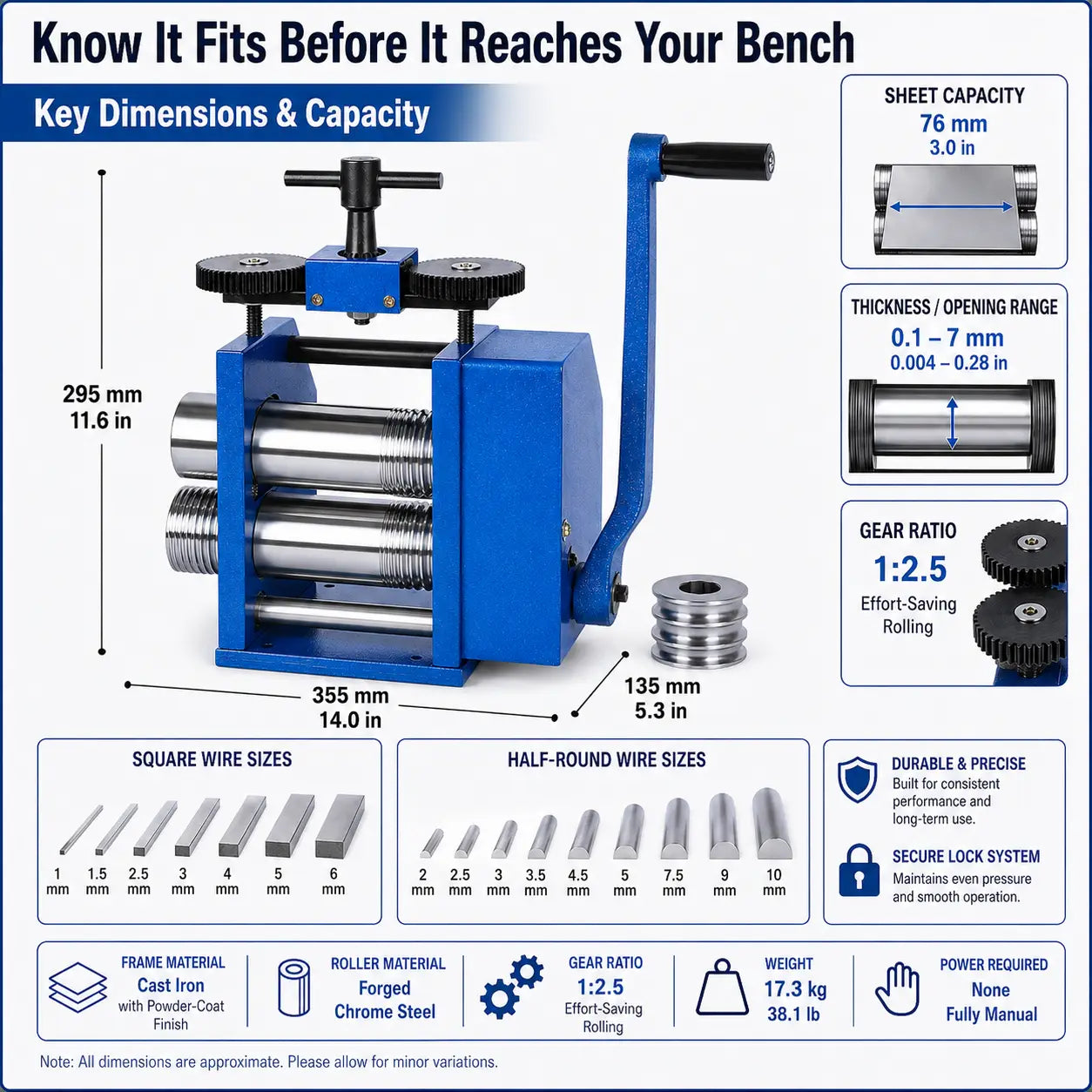
| Gear ratio | 1:2.5 |
| Roller-gap range | 0.1–7 mm (0.004–0.28 in) |
| Sheet width | 1–76 mm (up to 3.0 in) |
| Square-wire sizes | 1 / 1.5 / 2.5 / 3 / 4 / 5 / 6 mm |
| Half-round-wire sizes | 2 / 2.5 / 3 / 3.5 / 4.5 / 5 / 7.5 / 9 / 10 mm |
| Frame | Cast iron with powder-coated finish |
| Rollers | Forged chrome steel |
| Overall dimensions | 355 x 135 x 295 mm (14.0 x 5.3 x 11.6 in) |
| Weight | 17.3 kg (38.1 lb) |
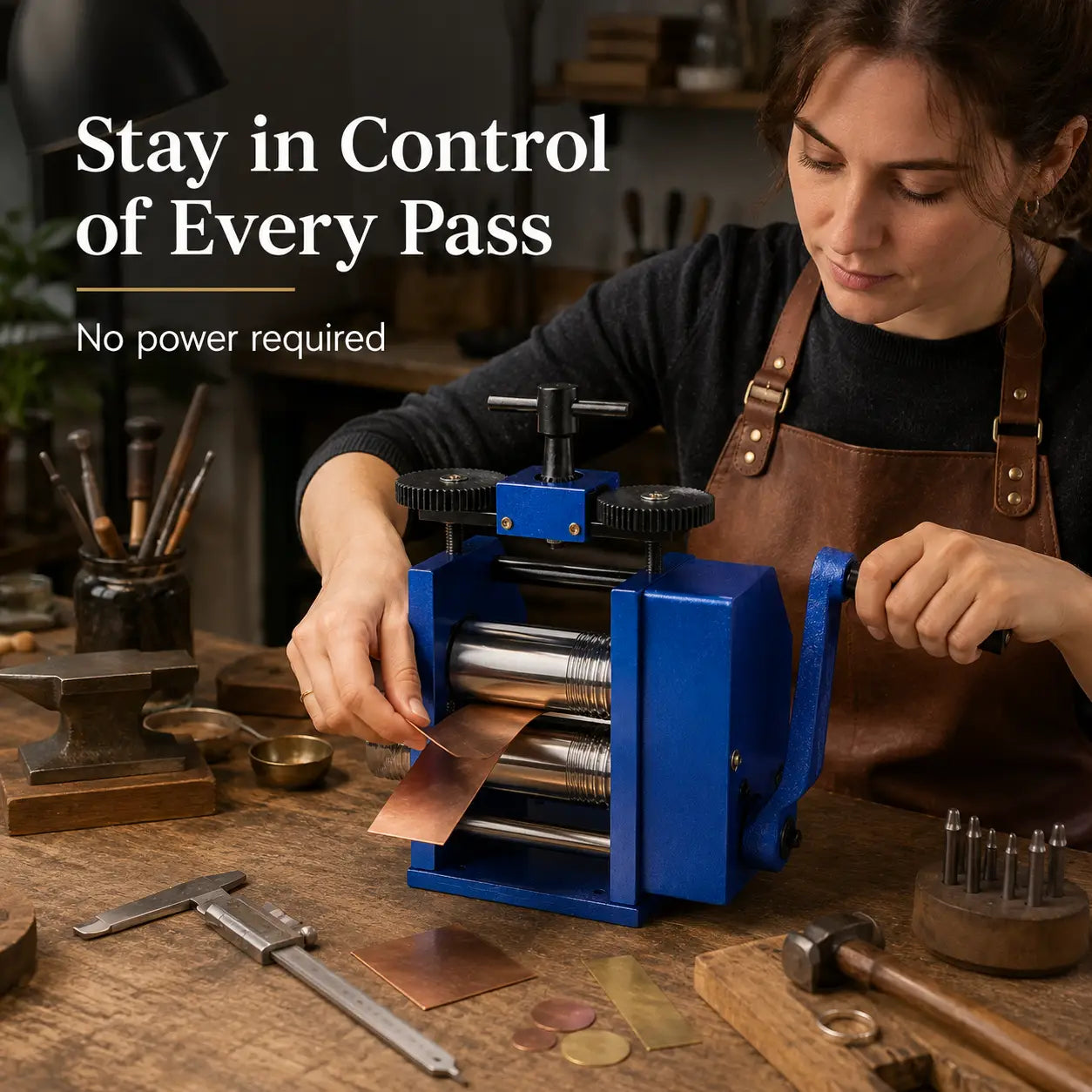
| Operation | Manual hand crank; no electricity required |
| Compatible metals | Gold, silver, copper, brass, bronze and similar non-ferrous jewellery alloys |
Pro Tips
- Bolt the base to a sturdy, level workbench before adjusting or feeding material.
- Anneal stock before rolling and again whenever work-hardening makes further reduction difficult; follow the requirements of the specific alloy.
- Measure before and after each pass, reduce the gap gradually, and keep the feed direction consistent to improve control.
- Deburr sharp edges and keep the rollers free of grit; contamination can mark both the rollers and the workpiece.
- Wipe the rollers after use and apply a light machine oil for corrosion protection, removing excess oil before the next clean-metal pass.
FAQ
Can it form round wire?
No. This model supports flat sheet, square wire and half-round wire only. Round wire requires a mill with dedicated round-wire grooves.
What metals can be used?
It is intended for gold, silver, copper, brass, bronze and similar non-ferrous jewellery metals. Do not use steel, titanium or hardened stock, which may damage the rollers.
Does it require electricity?
No. The rollers are driven by the geared hand crank only.
Must it be mounted to a bench?
Yes. Secure the base to a sturdy workbench through its mounting points before operation; the 17.3 kg machine should not be operated loose.
Can it press textures into sheet?
Yes. The flat rollers can transfer texture from a suitable texture sheet into annealed non-ferrous sheet. Use a controlled setup and do not exceed the confirmed width or gap limits.
How do I reduce thickness safely?
Use gradual, measured passes and anneal when the alloy work-hardens. Do not force a large reduction in one pass; the correct schedule depends on material, starting condition and desired result. Contact the Tooltos team at sales@tooltos.com if you need further guidance.
What's Included
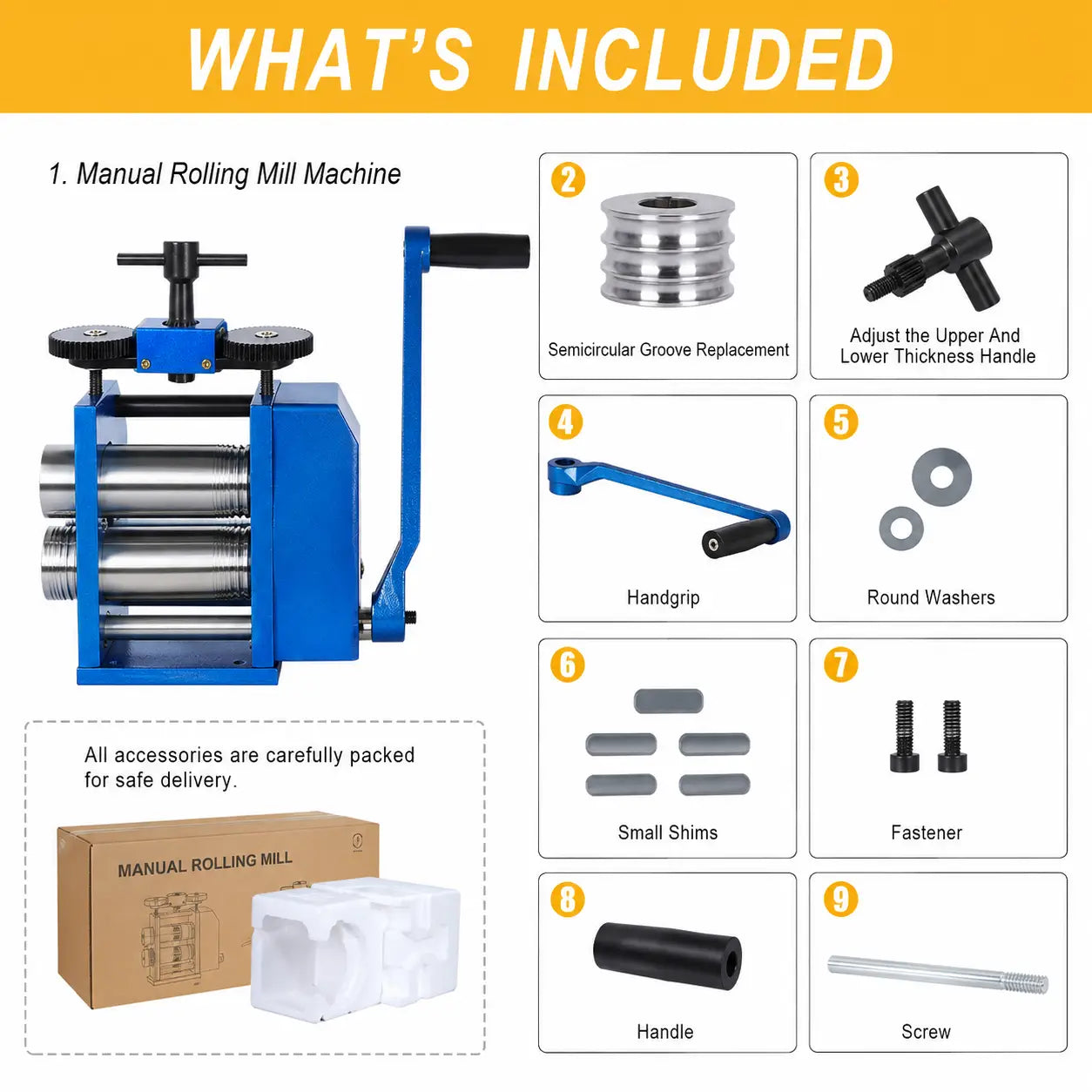
- 1 x 3-in-1 manual jewellery rolling mill
- 1 x half-round groove replacement roller set (9 sizes)
- 1 x T-bar adjustment handle
- 1 x side crank handle
- 1 x mounting hardware kit
Package contents may be updated. Check the current product images and packing information if a particular accessory is essential.
Support
Questions about setup, operation, compatibility or order status? Contact the Tooltos team at sales@tooltos.com. We respond within 24 hours on business days.