800°C Dual-Control Jewelry Burnout Furnace with 5-Stage Programme
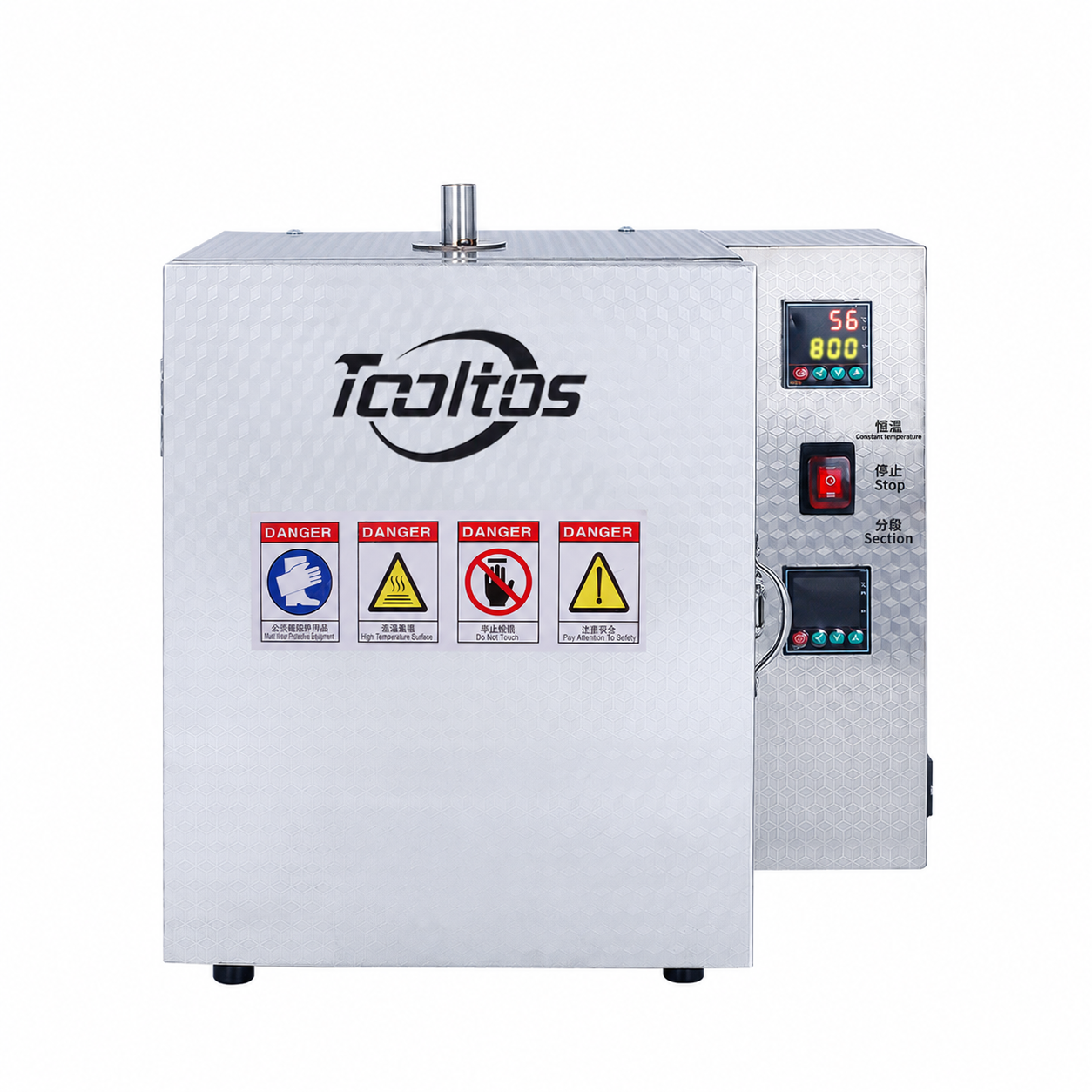
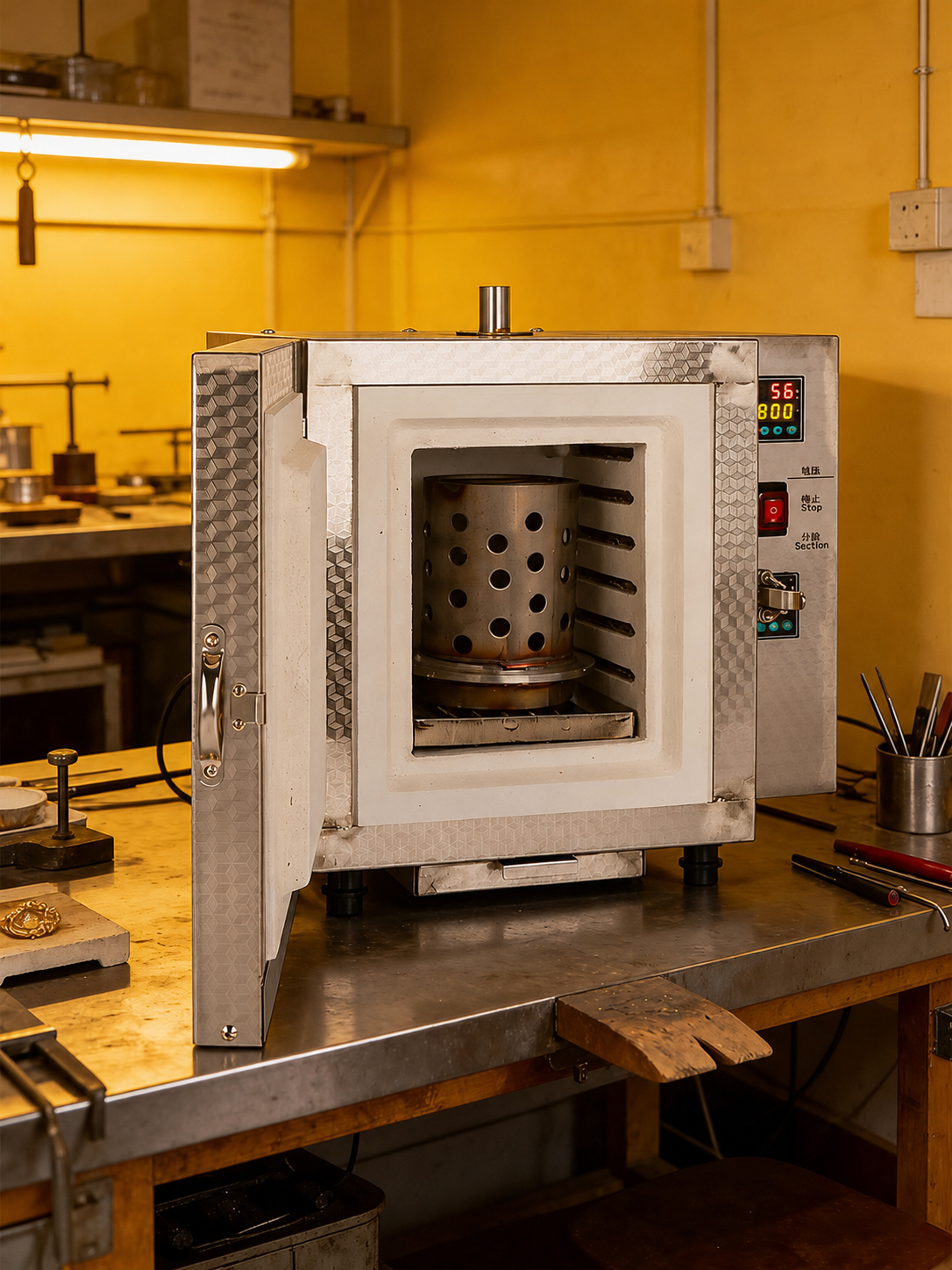
A compact 1500W jewelry burnout furnace with two selectable control modes: constant-temperature operation for maintaining a single setpoint and segmented programme control for multi-stage burnout cycles. Designed for wax removal, investment mold preparation and casting flask preheating, with an integrated wax drain and top exhaust port.
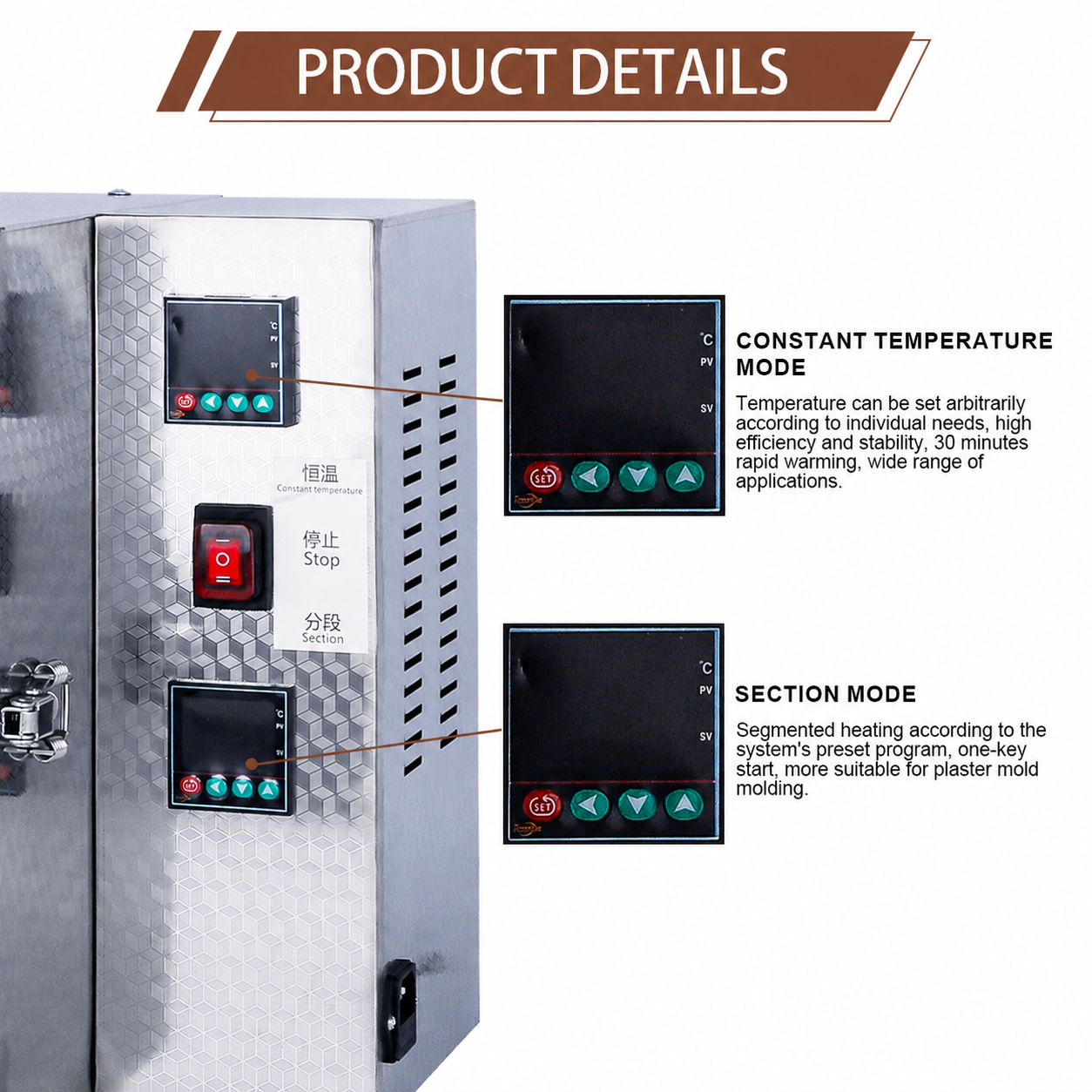
Control Mode 1: Constant-Temperature Operation
Use this mode when the process requires one selected temperature to be reached and maintained.
Typical workflow:
Select Constant-Temperature Mode.
Set the required target temperature.
Start heating.
Monitor the furnace until it reaches the selected temperature.
Maintain the setpoint for the required period.
Stop the furnace and allow controlled cooling.
This mode does not automatically create a complete multi-stage heating curve.
Control Mode 2: Segmented Programme Operation
Use this mode for a programmed sequence containing multiple heating and holding stages.
A typical burnout cycle may include:
Low-temperature moisture removal
Controlled wax drainage
Progressive wax burnout
Final residue removal
Adjustment to the required flask temperature
The exact temperatures, ramp times and holding periods must be selected according to:
Investment material
Flask size
Wax volume
Model thickness
Casting alloy
Investment manufacturer’s instructions
Workshop conditions
Programme Warning
Never enter a programme stage above the furnace’s confirmed maximum operating temperature. Verify all factory-set programme parameters before first use.
Technical Specifications
|
Specification |
|
Details |
|
Product Type |
|
Dual-control jewelry burnout furnace |
|
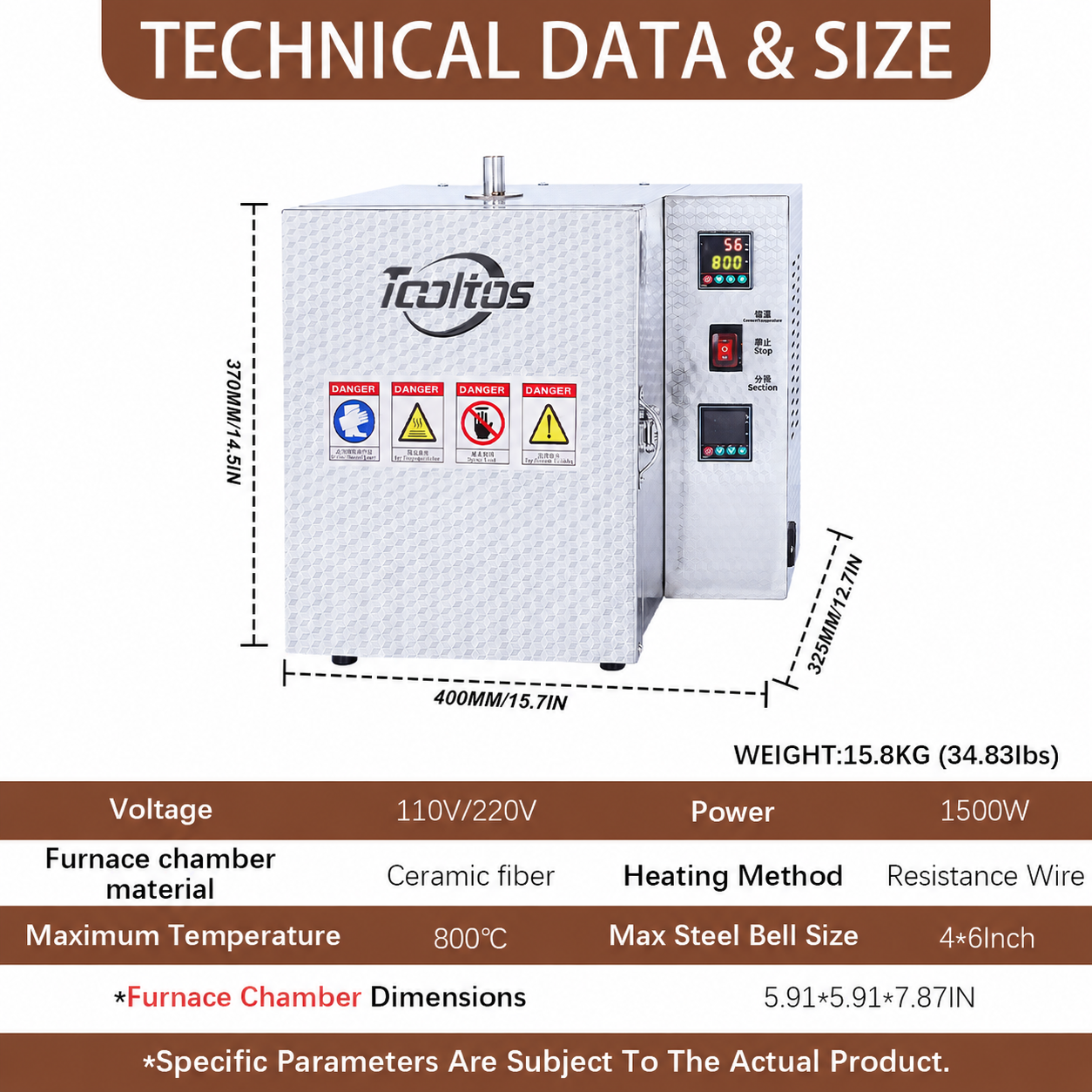
Maximum Rated Temperature |
|
800°C |
|
Rated Power |
|
1500W |
|
Voltage Options |
|
Separate 110V or 220V versions |
|
Frequency |
|
60Hz for 110V version / 50Hz for 220V version, subject to configuration |
|
Control Modes |
|
Constant-temperature control and segmented programme control |
|
Heating Method |
|
Resistance-wire heating |
|
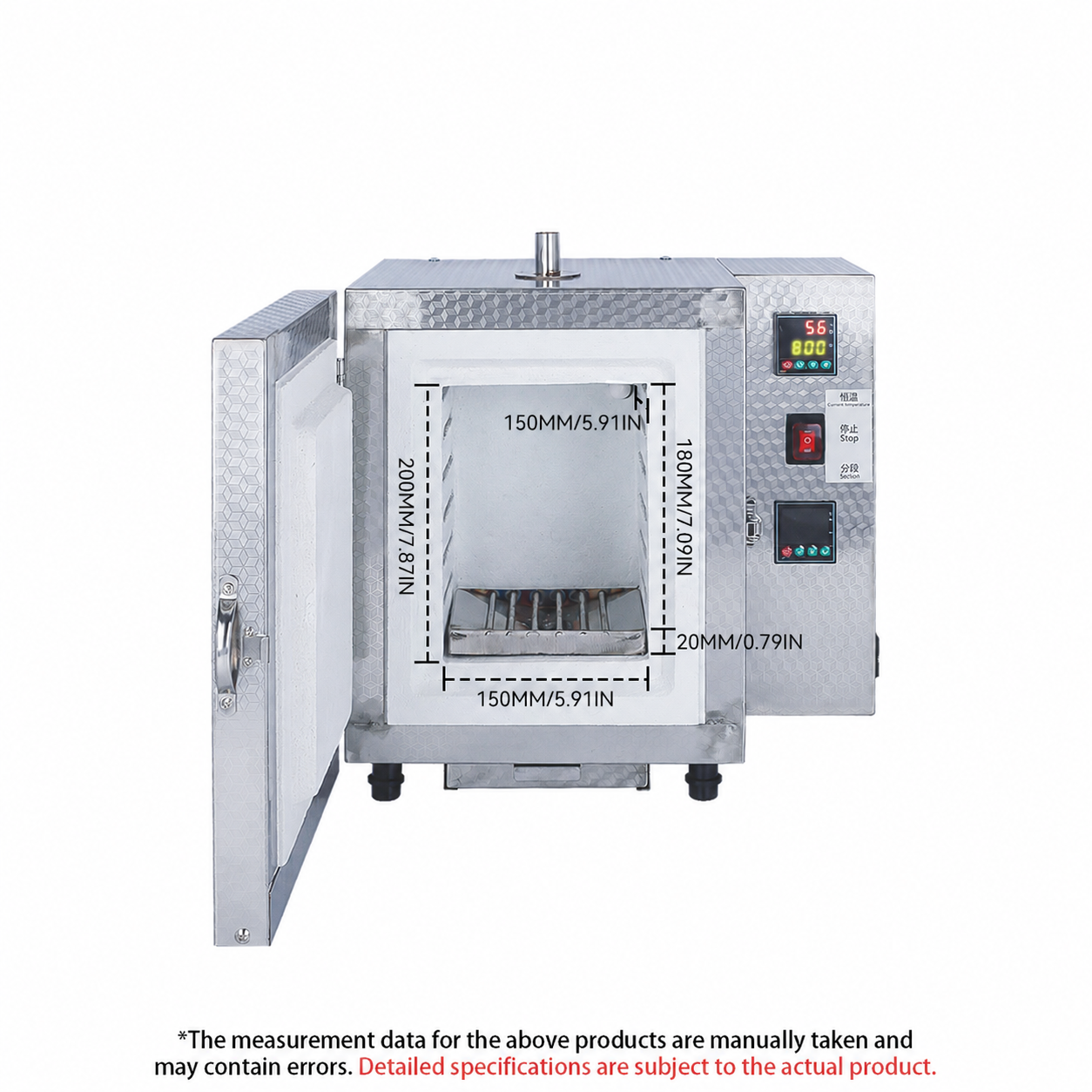
Internal Chamber |
|
Approximately 150 × 150 × 200 mm |
|
Internal Chamber |
|
Approximately 5.9 × 5.9 × 7.9 in |
|
Approximate Maximum Flask Size |
|
Up to 102 × 178 mm |
|
Approximate Maximum Flask Size |
|
Up to 4 × 7 in |
|
External Dimensions |
|
Approximately 400 × 330 × 410 mm |
|
External Dimensions |
|
Approximately 15.7 × 13.0 × 16.1 in |
|
Net Weight |
|
Approximately 15.8 kg |
|
Net Weight |
|
Approximately 34.8 lb |
|
Exhaust |
|
Top exhaust outlet |
|
Wax Management |
|
Bottom wax drain |
|
Primary Applications |
|
Wax burnout, mold baking and flask preheating |
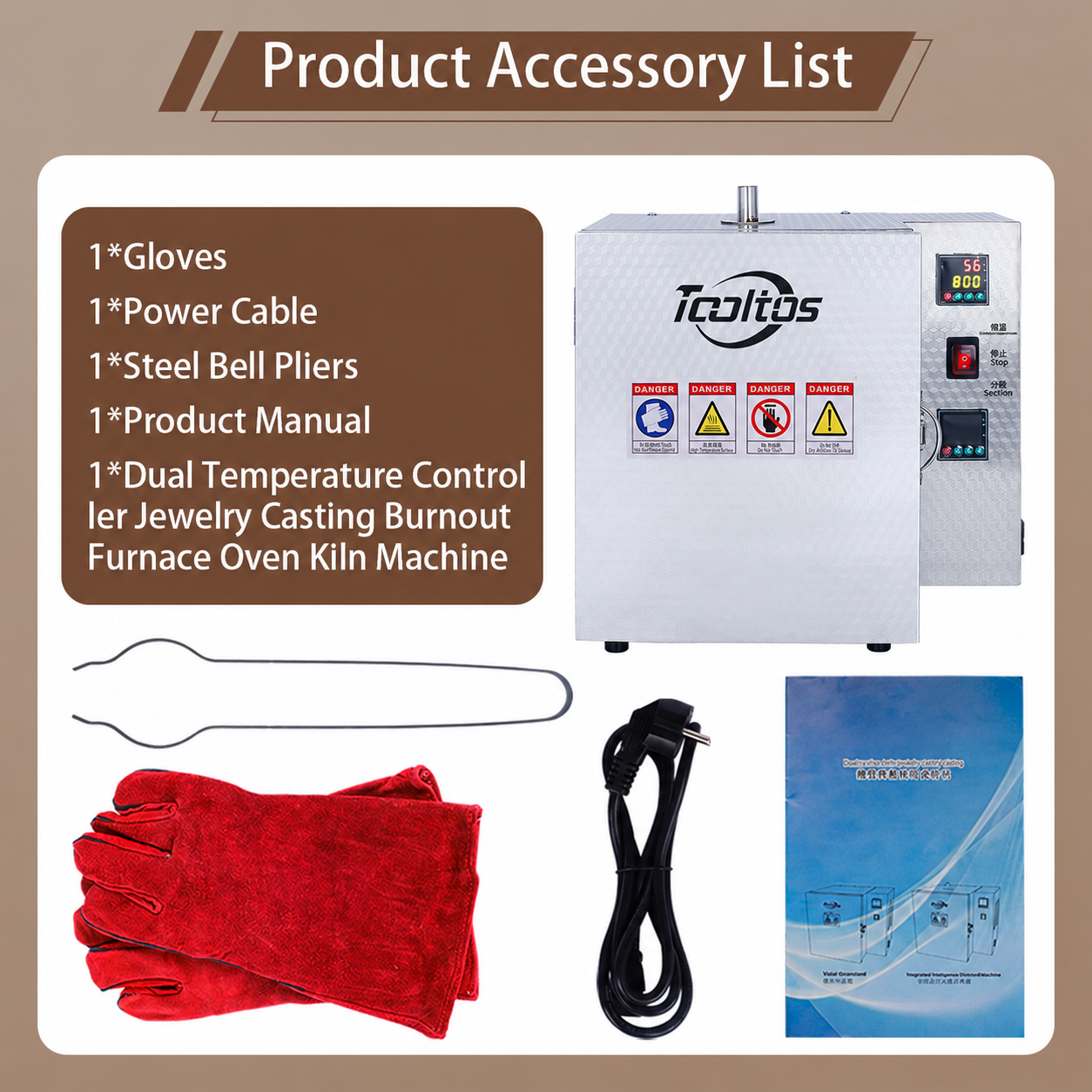
What’s Included
1 × Dual-Control Jewelry Burnout Furnace
1 × Flask Lifting Tongs
1 × Pair of Heat-Resistant Gloves
1 × Power Cable
1 × User Manual
Important Safety Information
Select the correct voltage before ordering.
Install the furnace on a stable, level and heat-resistant surface.
Use a dedicated electrical circuit that meets the machine’s rated power requirements.
Keep combustible materials away from the furnace.
Maintain sufficient ventilation around the control housing.
Use the furnace only in a properly ventilated workshop or with suitable local exhaust extraction.
Do not block the top exhaust port.
Do not touch the housing, door, exhaust outlet or wax drain while hot.
Use suitable heat-resistant gloves and flask-handling tools.
Do not exceed the confirmed maximum operating temperature.
Verify all segmented-program settings before the first heating cycle.
Do not allow wax residue to block the bottom drain.
Allow the furnace to cool before cleaning or maintenance.
Do not place a flask in contact with the heating elements, sensor or chamber lining.
Do not operate the furnace unattended without appropriate workshop supervision and safety procedures.
Follow the burnout instructions supplied by the investment manufacturer.
FAQ
Frequently Asked Questions
What is the difference between the two controllers?
The upper controller is intended for constant-temperature operation, allowing one target temperature to be selected and maintained.
The lower controller is intended for segmented programme operation, allowing the furnace to progress through a multi-stage heating and holding cycle.
The two modes are selected using the front control switch and are not used simultaneously.
Can the constant-temperature controller create a complete heating schedule?
No. It is primarily used to set and maintain one target temperature. Use the segmented programme controller when a multi-stage ramp-and-hold cycle is required.
What is the maximum temperature?
The rated maximum temperature shown for this model is 800°C.
Can the segmented programme be changed?
Programme functionality depends on the controller configuration. Check the supplied manual before changing any stage, ramp time or holding time.
All programmed temperatures must remain within the confirmed operating range of the furnace.
Can it hold a 4 × 7 inch flask?
The chamber measures approximately 150 × 150 × 200 mm and can accommodate a flask up to approximately 102 × 178 mm.
Actual fit depends on the flask design and the clearance required for safe loading and removal.
Does the exhaust port replace workshop ventilation?
No. The exhaust port only provides an outlet from the chamber. The furnace must still be used with appropriate room ventilation or local exhaust extraction.
Is the furnace suitable for melting gold or silver?
No. This model is designed for wax burnout, mold preparation and flask preheating. Use a dedicated metal melting furnace for gold, silver or other casting alloys.
Can it be used for metal clay?
It may be suitable for selected metal-clay materials whose firing schedule remains within the furnace’s confirmed capabilities. Check the clay manufacturer’s instructions before use.
How quickly does it reach 800°C?
Heating time varies according to the programme, chamber load, flask size, room temperature and electrical supply. A fixed heat-up time should not be assumed.
Can the furnace be left running unattended?
No high-temperature furnace should be promoted as suitable for unrestricted unattended operation. Use it only under appropriate workshop supervision and safety procedures.
Which voltage should European customers choose?
Most European workshops use a supply in the 220–240V range, but customers must confirm their actual electrical supply before ordering. The machine is supplied as a specific voltage version and is not automatically dual-voltage.