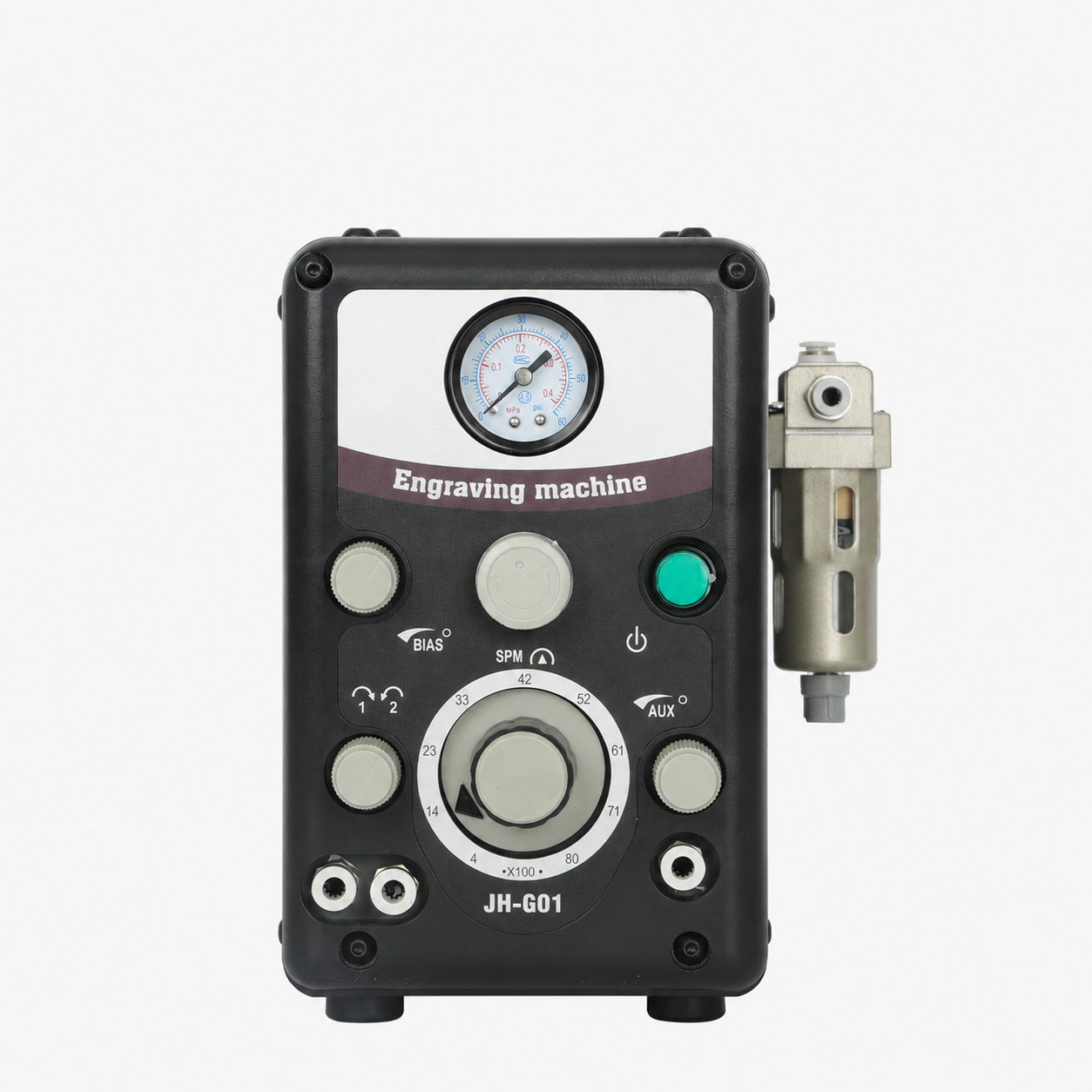
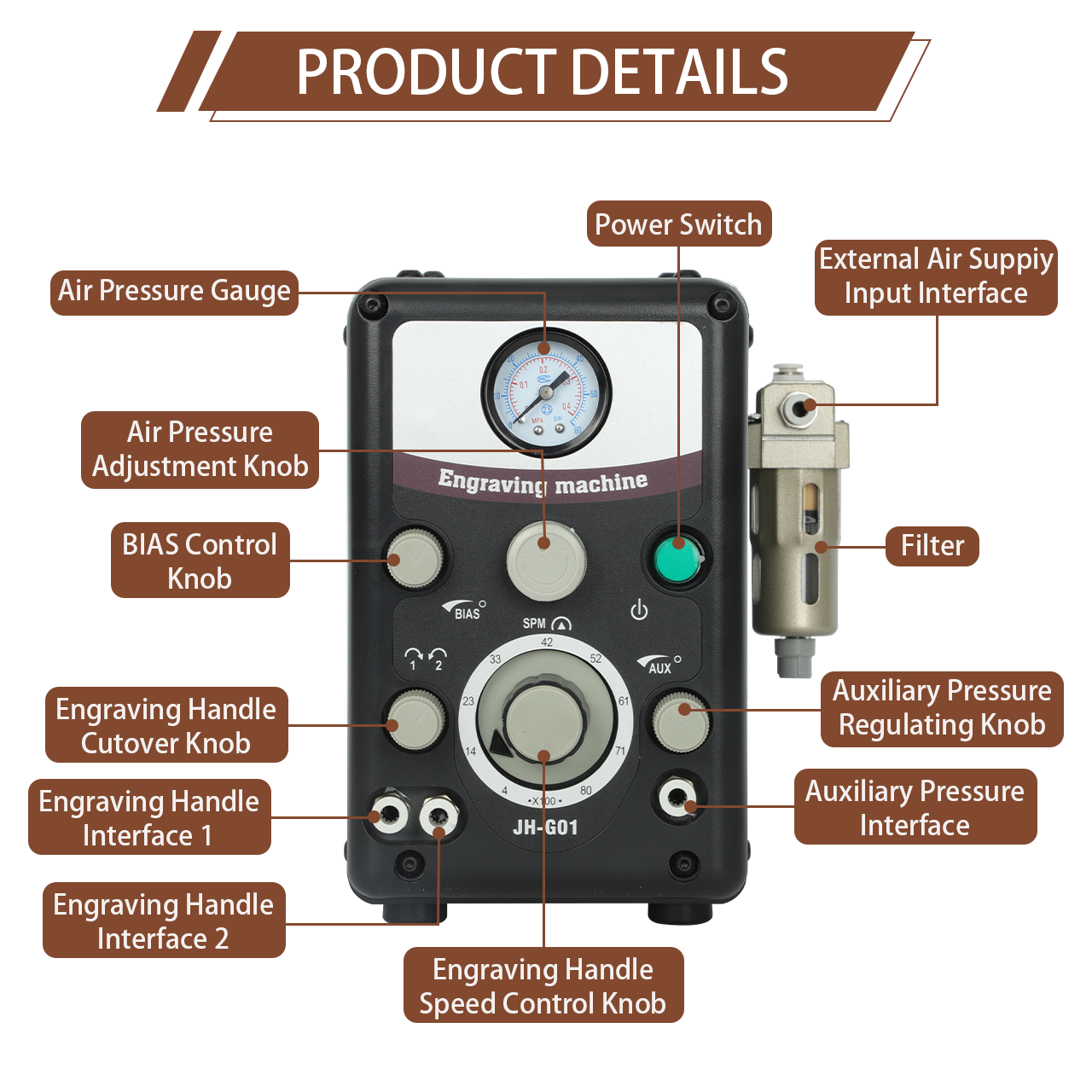
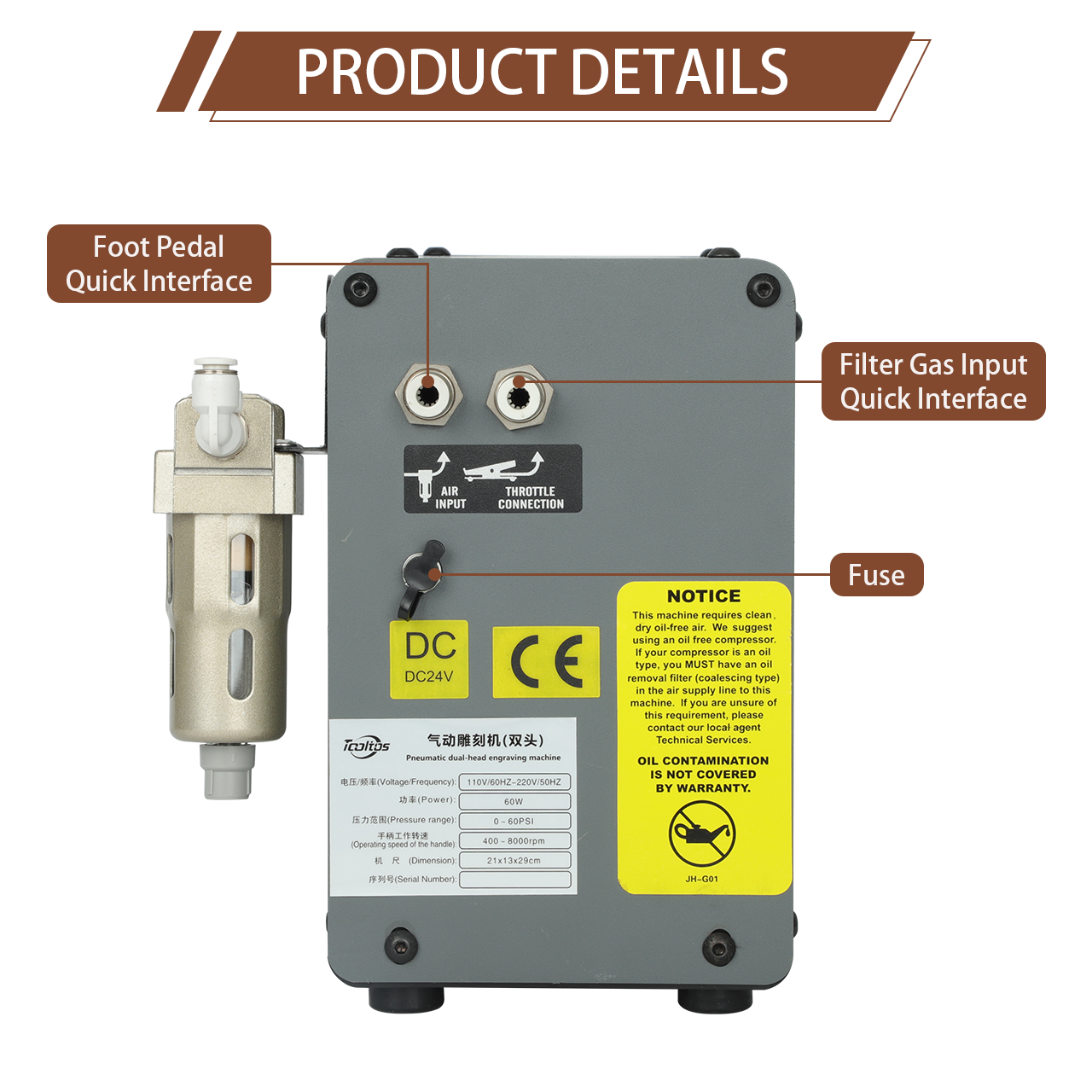
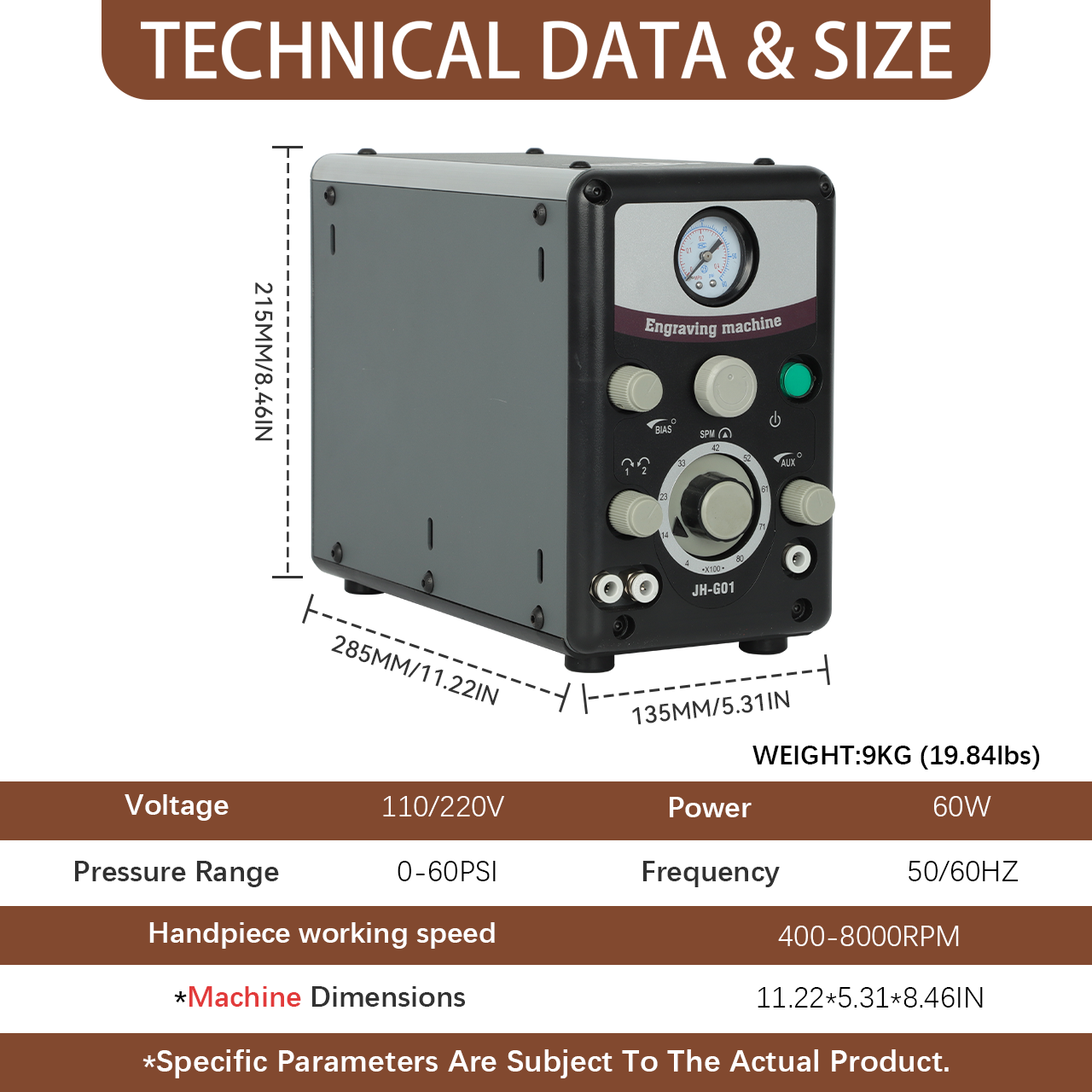
8000 RPM Dual-Handpiece Pneumatic Jewellery Engraving Machine
Suitable Applications
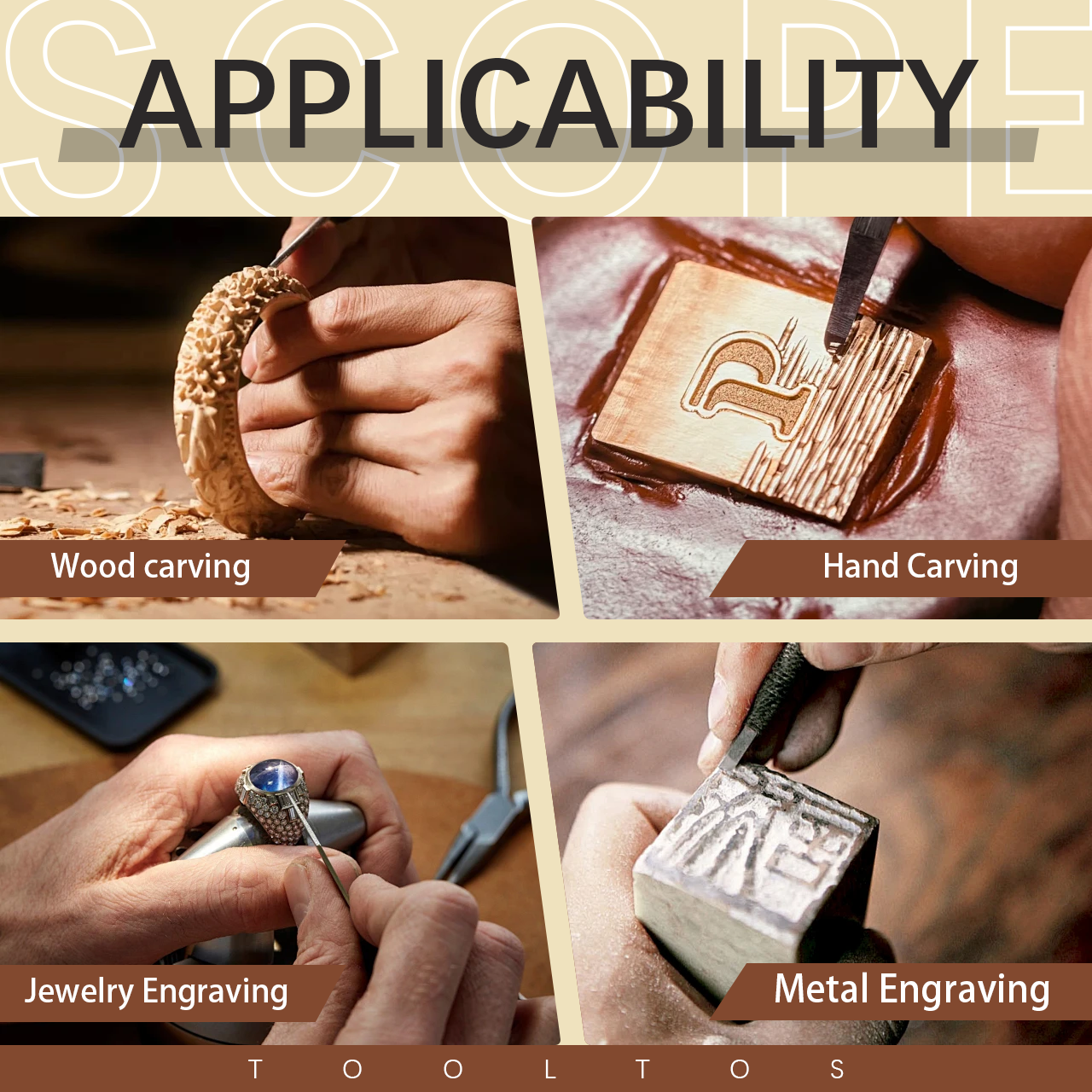
Hand engraving on jewellery
Lettering and decorative line work
Surface texturing
Stippling and shading
Milgrain and bead-edge detailing
Stone-setting preparation
Prong and bead work
Fine metal carving
Rings, pendants, bracelets and small metal components
Gold, silver, copper and brass work
Results depend on the selected graver, air pressure, speed setting, material hardness and operator experience.
Limitations
This machine is not intended for:
Rotary drilling, sanding or polishing
Laser engraving
CNC engraving
Use without an external air compressor
Unsupported freehand work without securing the workpiece
Hardened steel, titanium or very hard alloys without suitable specialist gravers
Cutting materials beyond the capacity of the installed graver
Technical Specifications
|
Specification |
Details |
|
Product type |
Pneumatic impact jewellery engraving machine |
|
Rated power |
100W |
|
Manufacturer-rated speed |
400–8000 RPM |
|
Required incoming air pressure |
0.15–0.25 MPa |
|
Required air pressure in bar |
Approximately 1.5–2.5 bar |
|
Pressure gauge range |
0–4 kg/cm² |
|
Voltage options |
110V or 220V |
|
Frequency |
50/60Hz |
|
Handpieces |
2 pneumatic engraving handpieces |
|
Control method |
Progressive foot pedal |
|
Air treatment |
Integrated moisture filter |
|
Housing |
Metal |
|
Machine dimensions |
Approximately 29 × 13 × 21 cm |
|
Machine weight |
Approximately 9.5 kg |
|
Air compressor |
Required and not included |
Air Compressor Requirements
A separate air compressor is required.
For reliable operation, the compressor should provide:
Stable regulated pressure of 0.15–0.25 MPa
Clean and dry compressed air
Oil-free air where possible
Sufficient continuous airflow for pneumatic engraving
A compatible hose connection
The correct voltage for the country of use
A quiet, oil-free compressor is recommended for jewellery studios.
When using an oil-lubricated compressor, install a suitable oil-removal filter before the machine. The built-in moisture filter should not be treated as a complete oil-separation system.
Do not exceed the recommended incoming air pressure.
Basic Setup and Operation
Place the control unit on a stable, level workbench with suitable lighting.
Position the foot pedal where it can be operated comfortably.
Connect the external compressor to the machine’s air inlet.
Confirm that the air supply is clean, dry and regulated to 0.15–0.25 MPa.
Connect both pneumatic handpieces to their corresponding fittings.
Install a compatible graver securely in each handpiece.
Use the selector control to choose the handpiece required for the current task.
Connect the foot pedal and power cable.
Secure the jewellery or metal component in a suitable engraving vice or workholding fixture.
Begin with a low pressure and moderate speed setting.
Place the graver tip against the workpiece before gently pressing the foot pedal.
Increase pedal pressure gradually until the required cutting response is achieved.
Guide the handpiece without applying excessive forward pressure.
Test the settings on a sample piece before working on valuable jewellery.
After use, release the pedal, switch off the machine and disconnect the compressed-air supply before removing the graver.
Operating Recommendations
Begin with lower speed and pressure settings.
Increase power gradually after testing the graver response.
Use a properly sharpened graver suitable for the material.
Secure the workpiece before beginning.
Allow the pneumatic impact to perform the cutting action.
Do not force the handpiece forward.
Use different handpieces for different graver profiles or cutting tasks.
Check hoses and fittings regularly for air leakage.
Drain collected moisture from the filter.
Stop immediately if the handpiece becomes unstable or inconsistent.
What’s Included
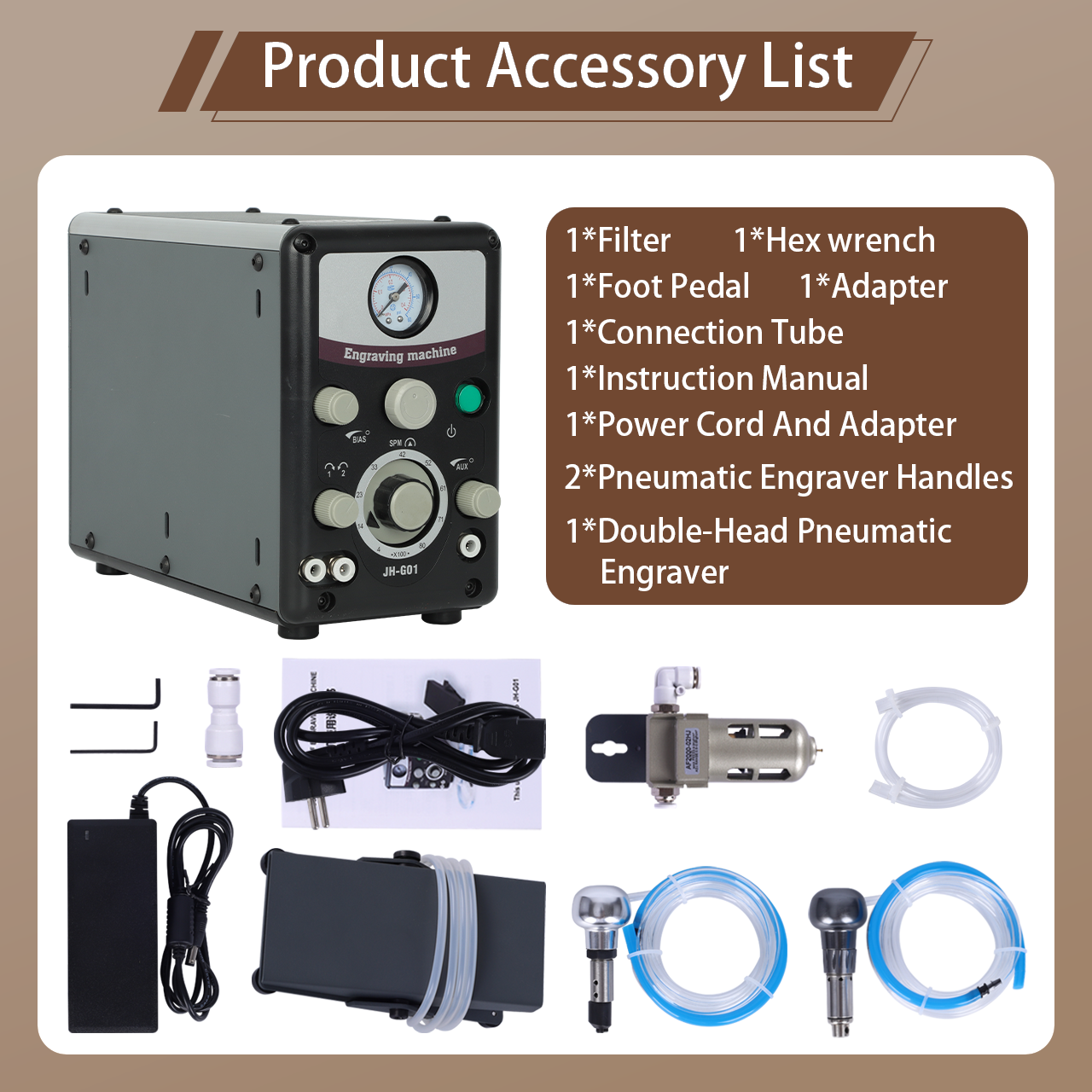
1 × Pneumatic engraving control unit
2 × Pneumatic engraving handpieces
1 × Foot pedal
1 × Air filter
1 × Air connection tube
1 × Power cable or power adapter
1 × Instruction manual
External air compressor, engraving gravers, engraving vice and workholding accessories are not included unless specifically shown as part of the selected package.
Electrical Compatibility
The machine is available in 110V and 220V versions.
The 220V option will normally be suitable for most European and UK workshops. Customers must confirm compatibility with their local mains voltage, plug type, socket and earthing before ordering.
The voltage of the external air compressor must also match the local electrical supply.
A plug adapter changes only the plug format and does not convert voltage.
Safety Information
Always wear suitable eye protection.
Secure the workpiece in an engraving vice or suitable holder.
Keep fingers away from the graver cutting edge.
Do not operate the machine with damaged hoses, cables or fittings.
Do not exceed the recommended air pressure.
Disconnect the air supply before installing or removing a graver.
Ensure the graver is correctly secured before operation.
Do not point an operating handpiece towards yourself or another person.
Keep the workbench clean and well illuminated.
Do not use the machine in wet or flammable environments.
Switch off and depressurise the system before cleaning or maintenance.
Appropriate engraving and stone-setting training is recommended.
Frequently Asked Questions
Is an air compressor included?
No. A compatible external air compressor must be purchased separately.
What pressure does the machine require?
The recommended incoming air pressure is 0.15–0.25 MPa, equivalent to approximately 1.5–2.5 bar.
What type of compressor should I use?
A quiet, oil-free compressor with stable regulated output is recommended. If an oil-lubricated compressor is used, install an additional oil-removal filter.
Can both handpieces operate at the same time?
No. The selector control is used to choose one handpiece at a time.
Why are two handpieces included?
The two handpieces allow different gravers to remain installed. This makes it quicker to switch between tasks without repeatedly changing the cutting tool.
Is this a rotary engraving machine?
No. It is a pneumatic impact engraving system. The handpiece delivers repeated impact strokes to the graver rather than rotating a drill bit like a micromotor.
How is the engraving power controlled?
The main speed setting is adjusted on the control unit, while the foot pedal progressively controls the handpiece response during engraving.
Which metals can it engrave?
It is primarily intended for jewellery metals such as gold, silver, copper and brass. Performance on steel, titanium and other hard metals depends on their hardness and the graver used.
Are engraving gravers included?
The standard package does not list engraving gravers. Compatible gravers must be selected separately unless they are specifically included in the chosen package.
Should the handpiece be lubricated?
No. Do not add oil to the handpiece piston, spring or internal bore. Oil contamination can cause unstable operation.
Which voltage should European customers select?
The 220V version will normally be suitable for most European and UK locations, but local electrical compatibility must be confirmed before ordering.